Swedish Electrics
|
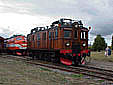 |
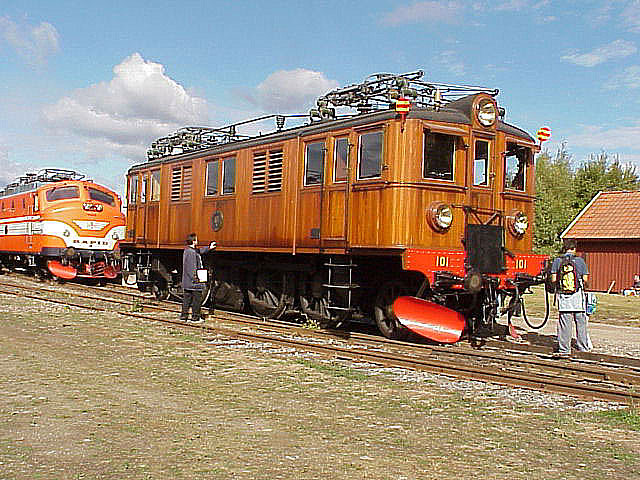
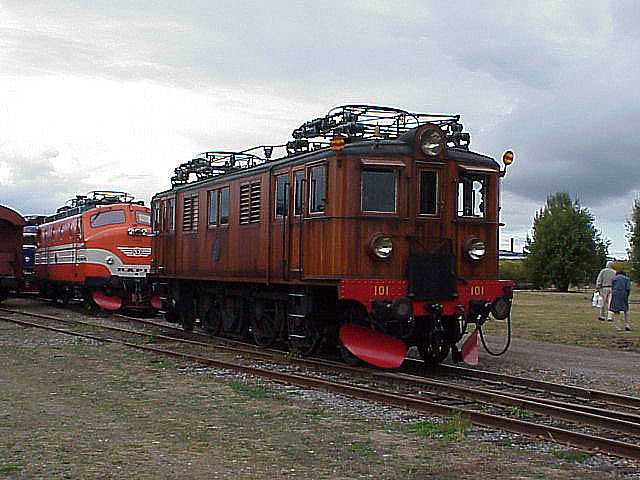
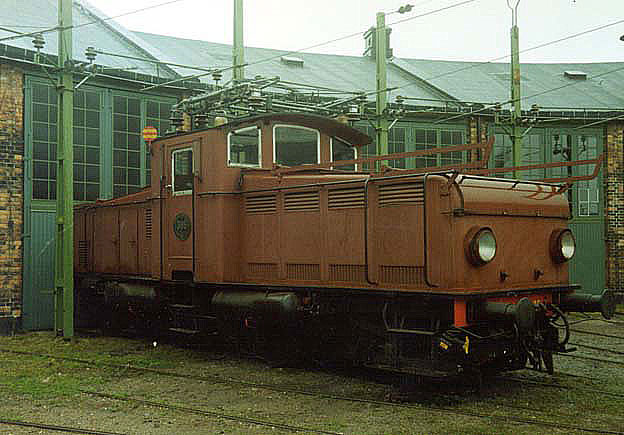
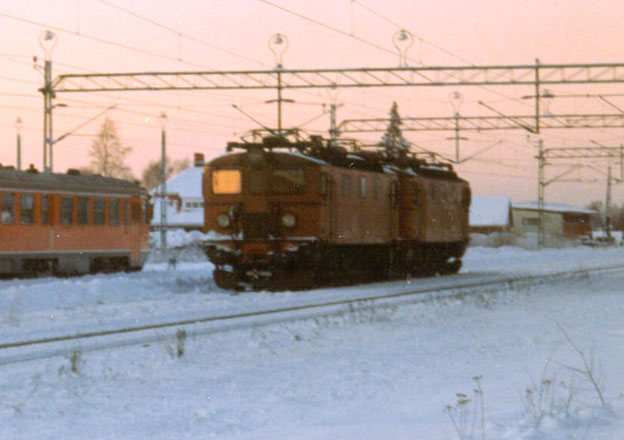
This is one of the early of the standard electrics of the D-class. The early engines like this 101 has
a wooden body, the later ones have bodys of riveted steel. The class was considered so successful
that during the fifties an new class of Da was constructed followed by the Dm and Dm3 oretrain engines. The last
of the Dm3.s closed the era of siderod powered electrics on SJ.
|
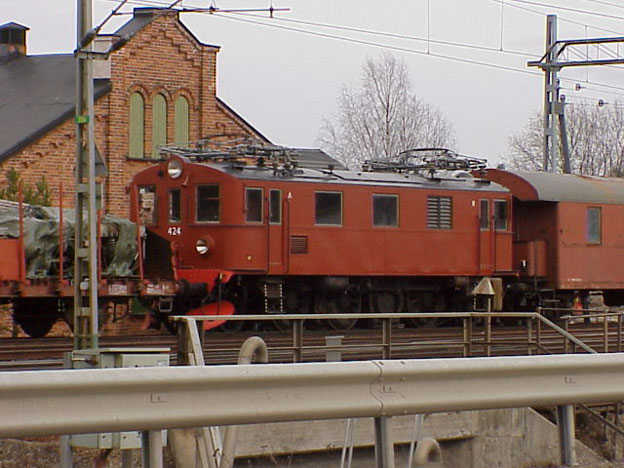
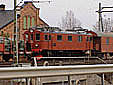 SJ Du 424. |
Preseved steelbodied Du 424 at Sala in April of 2003. The engine now belongs to Preseved group that headqurters in Stockholm. |
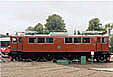
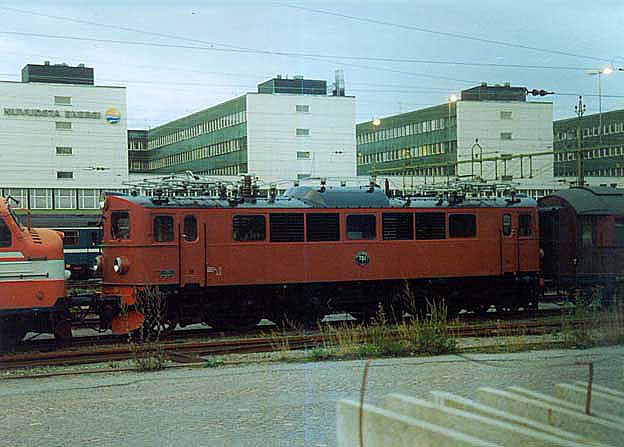
SJ F in Sundbyberg
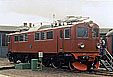
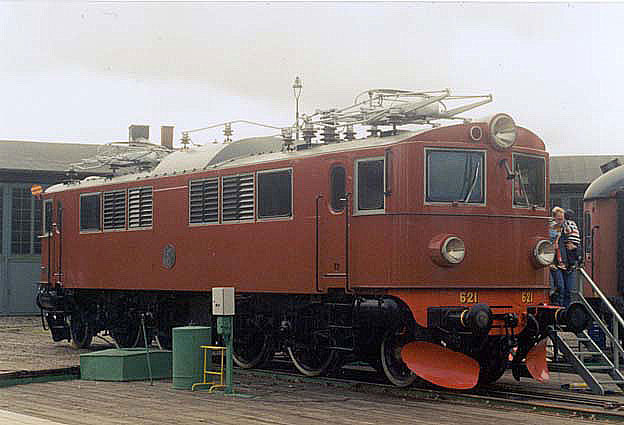
SJ F 621
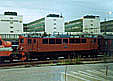
SJ F 621
|
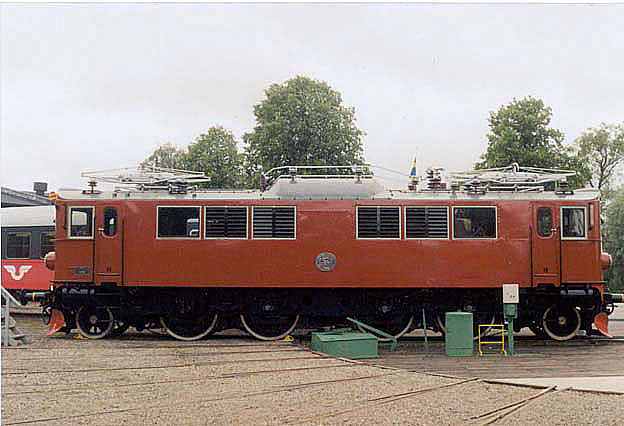
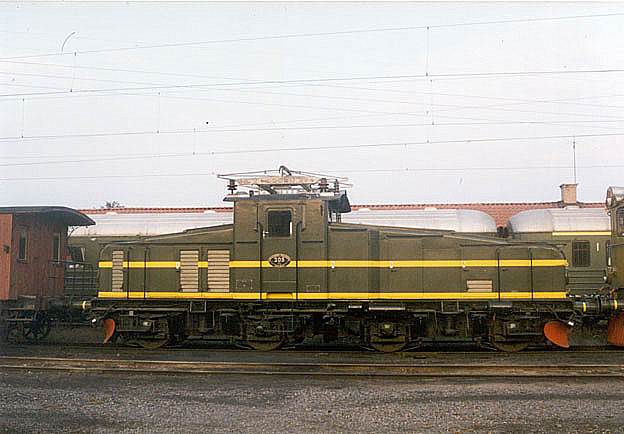
The handsome electrics of the F class dates from the 40.ties.
Largely influenced by the German E18 and E19 classes, these 135 km/h fast and
3 600 hp engines were used on fast passanger runs to the late eighties.
By then bumbed to secondary service and local runs, even to haul freight peddlers.
Three of the engines did survive, two are in use for
excursiontrains by SKÅJ at Stockholm area. The third pictured here F 621 restored as she was in the fifties, is
displayed at The Railway Museum in Gävle.
|
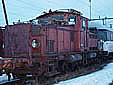
SJ ÖC 409? |
A unique early type of battery powered unit of Öc- class waiting for uncertain future
in Grängesberg and appearently not as popular as the various passenger engines in terms to
restoration. These were the fore runners of the more common Öd class. The batteries were charged by the catenary and the engine could
run from the juice and while doing that rercharge the batteries. This type of engines were replaced by the T44, that came in numbers
during the late 60.es through the early 80.es
|
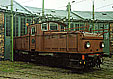
SJ Öd |
For use on unelectified industrial tracks and short branchlines SJ designed a number of
batterypowered engines. They could use the the current while running on a mainline and
switch to batteryoperation, The last of these engines were withdrawn in 1970.es.
|
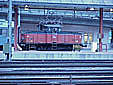
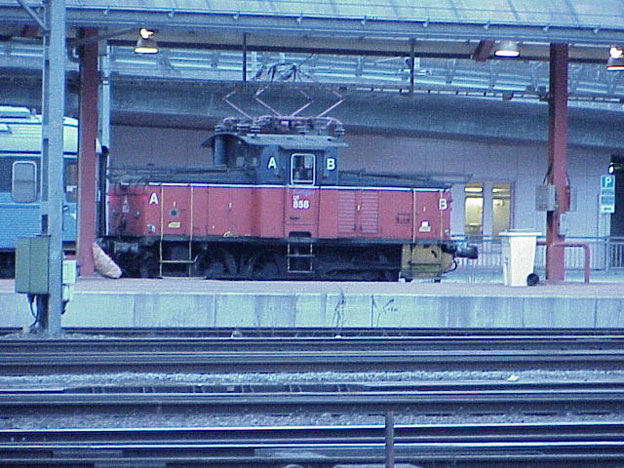
SJ Uf856 |
A suprice, a side rod UF electric switcher is still used in switching of the mailcars in Stockholm Central in April 2003. Orginally they
were painted in brown and repainted after modernization inthe late 1980.s Most of the sisters are withdrawn and scrapped.
|
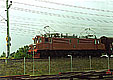
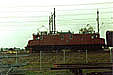
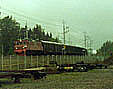
SJ Mg 621 |
From the same period as the fast F-class is the Mg-class.
These were intended for an allround service in northern parts of Sweden.
Not being entirely succesful, they were soon used for heavy freight service to the 1970.es.
Only one of these engines remains and the surviver underwent a long restauration and the
spotless engine is seen here on a photo runby in Gävle.
|
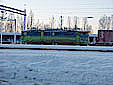
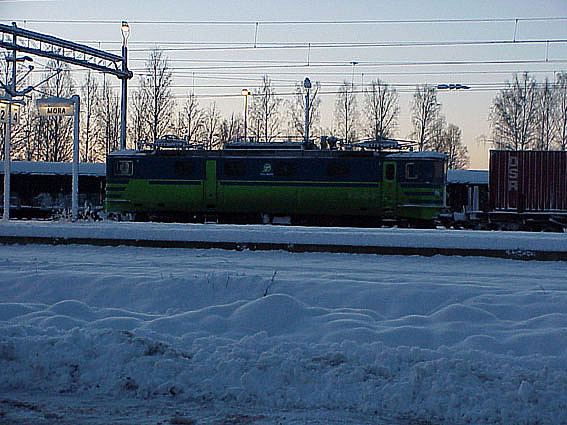
TGOJ Ma |
The first winter day is here, 24.th of November 2003 and it seem to have caused a great effort to keep the tracks clean.
But the effort has caused problems, and the Ma with its unit train of containers will have to run its train in full daylight instead of the more typical
night run.
|
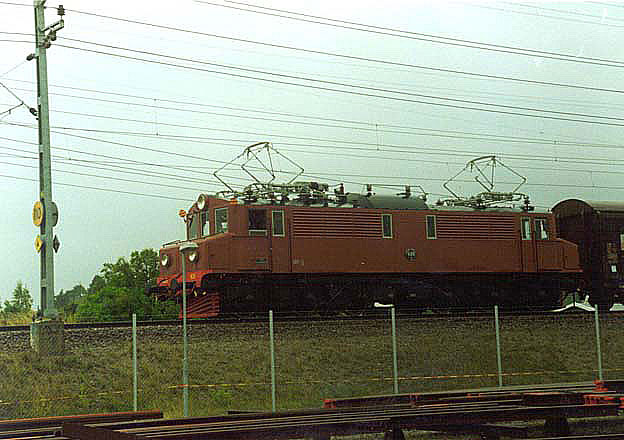
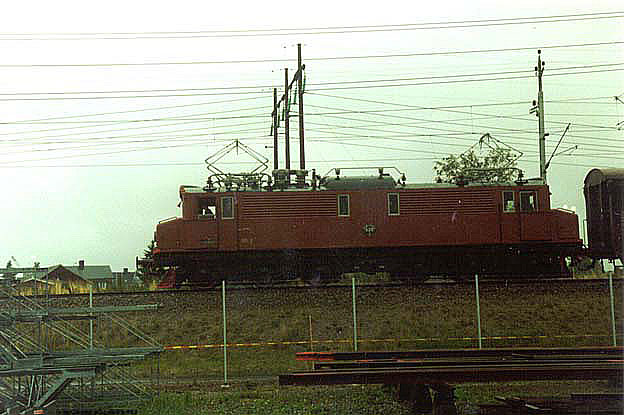
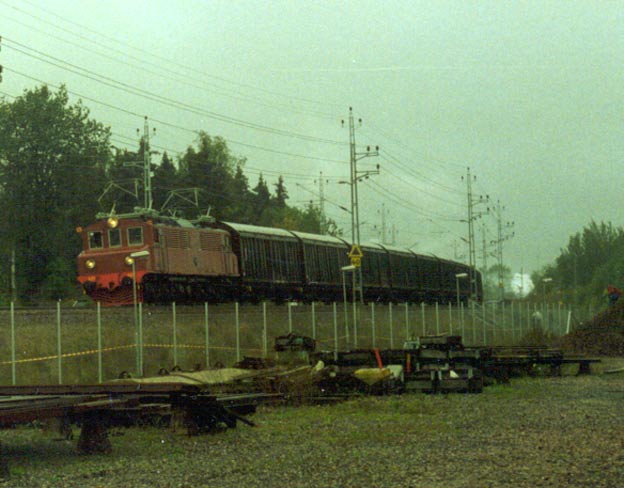
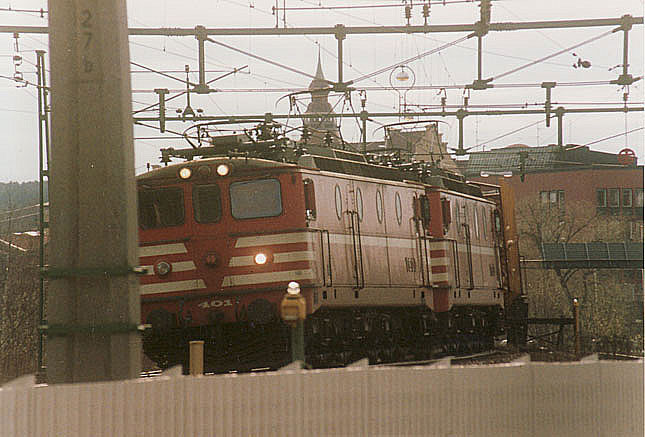
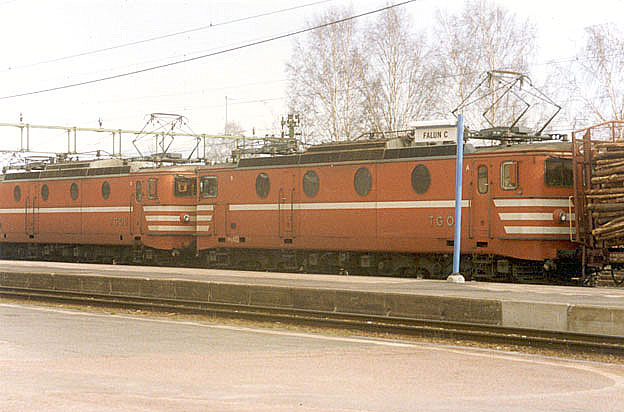
TGOJ Ma 401 |
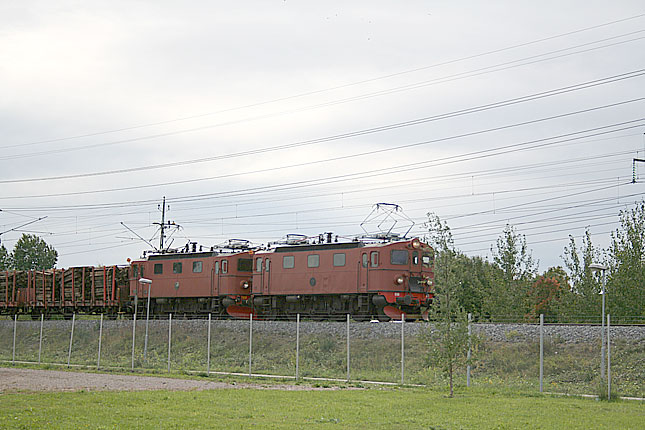
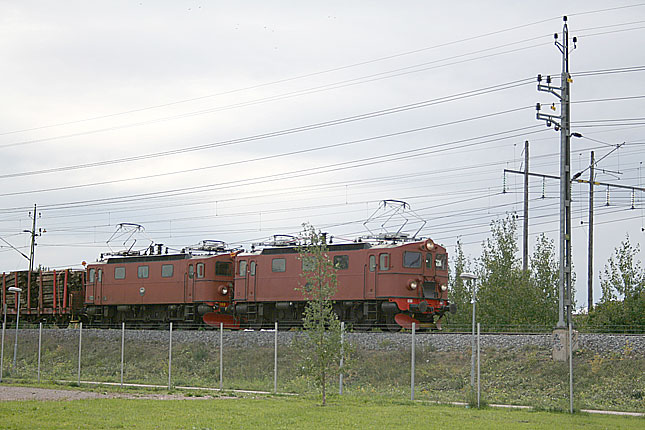
In a haze after a party in Falun in 1990.s just as I discovered that I had discovered that my camera was still
sitting in the passenger seat of my car. I had just enough time to fire away these two shots of double headed
freight of coils to the Gävle. I guess that the train orginated from Borlänge. These two are the only ones Igot on TGOJ orange scheme on Ma.s.
|
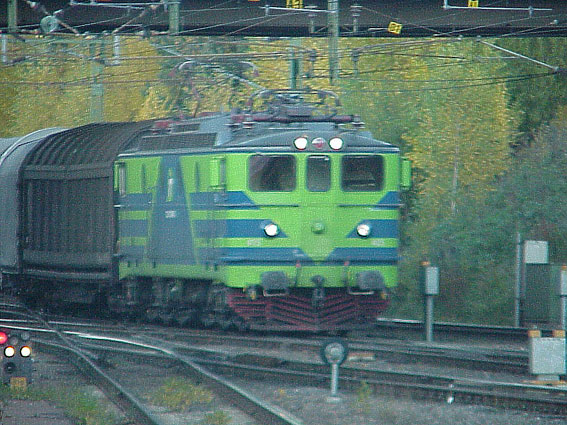
TGOJ Ma 405 |
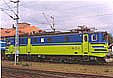
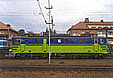
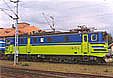
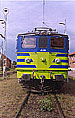
Not a top image but why not, one of the TGOJ.s repaint got a bit more of attention a the
paint shop and shows a bit color variation compared to its sisters. The unit is seen here creeping to halt with a southbound freight at Borlänge 14.th October 2003.
|
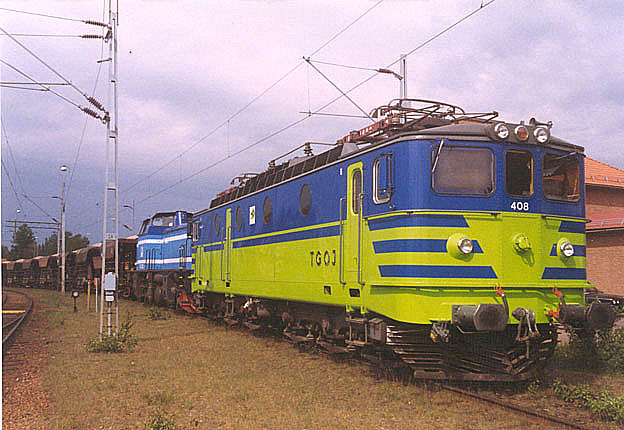
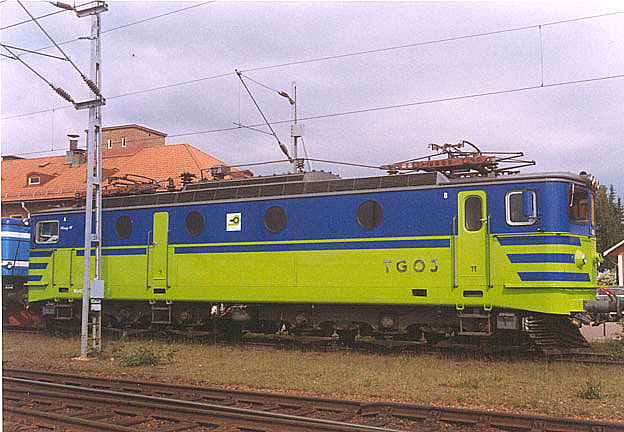
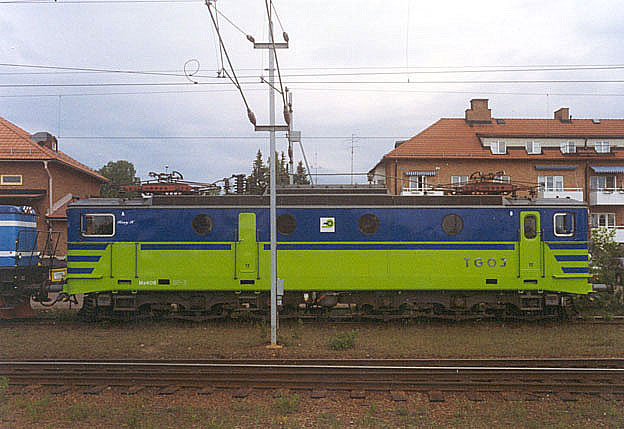
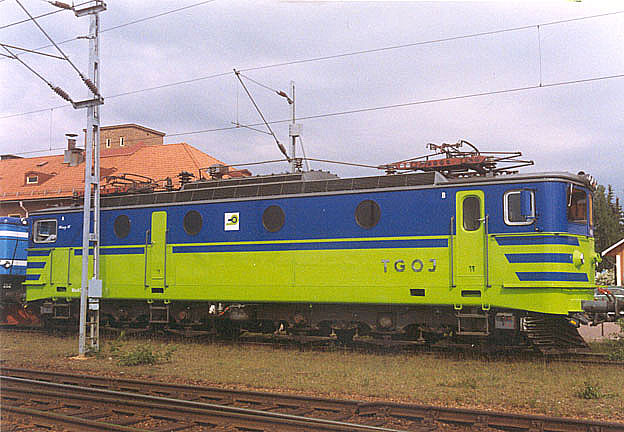
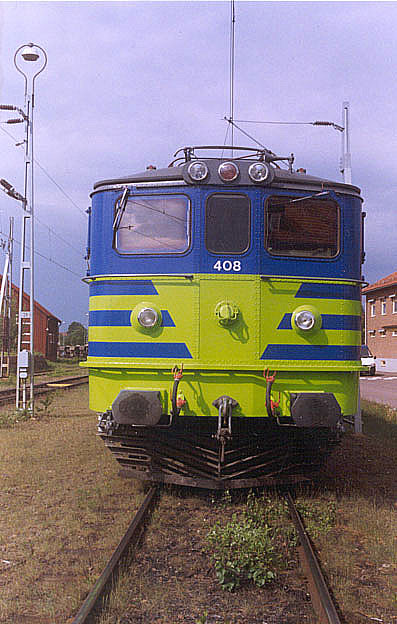
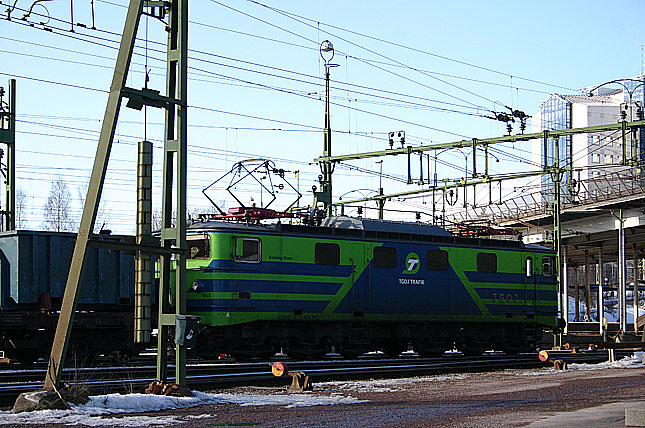
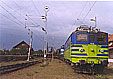 TGOJ 408 |
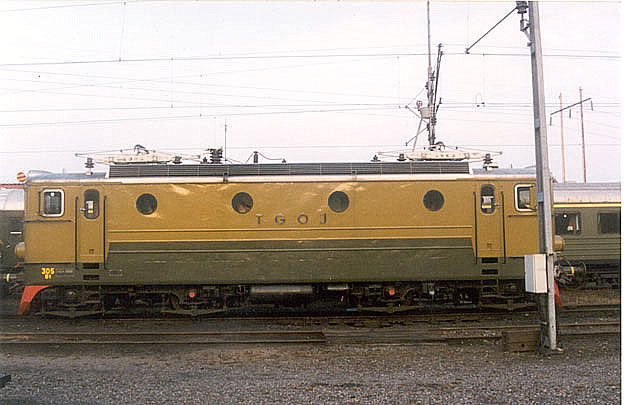
When SJ needed power that the Mg-class could not deliver for the main lines in north,
it was time for a new construction,the Ma-class. The only thing it had in common with
Mg was the color and that it rode on three axled trucks. The Ma-class cought on also
TJOJ.s attention for their oretrains and they ordered a class that in appearance
differed from SJ.s was that the machine room windows were round and the scheme.
First these engines wore a two tone green scheeme in a
somewhat different from the Bt-class, later repainted orange and white,
and once again in to this darkblue and light green when the company was
taken over by SJ. Now the company rosters the two variations of the Ma-classes,
and a number of T43.s and T44 that are considered as a surplus in SJ.
The engines of TGOJ is commonly used by private entrepreneurs to haul bulk unit trains.
This is the such case seen here. The T43 has hauled the graveltrain from the unelectrified
branch form Älvdalen to Mora, where the Ma engine 441 waits for the train and together
with the diesel, hauls further south. As witnessed in Mora in summer of 2000.
|
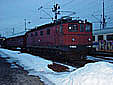
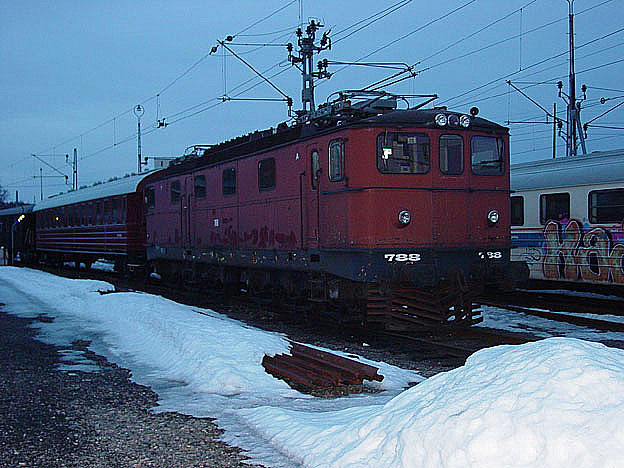
SJ Ma 788 |
SJ.s own Ma.s were decked out in the the redbrown just like the most of the steelbodied elctrics.
Note the machine room windows differs from the TGOJ version.
The Rc style number on the bufferplates were added in the 1980.s, and added a little extra interest to the units.
The Ma 788 was waiting for uncertain future in Grängeberg in March 2003.
|
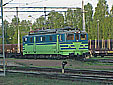
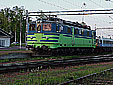
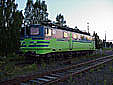
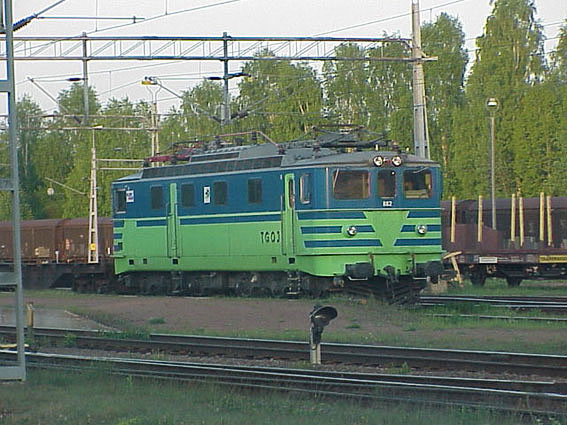
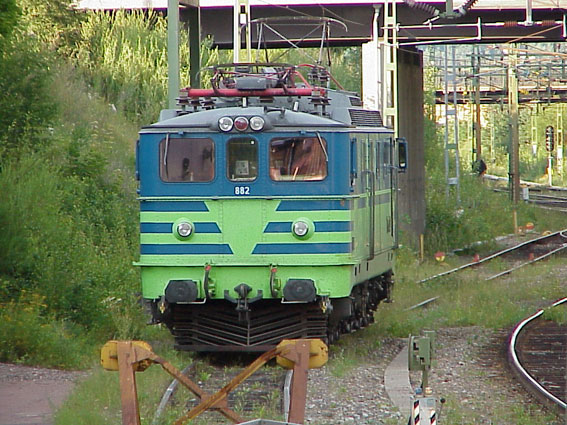
TGOJ Ma 882 |
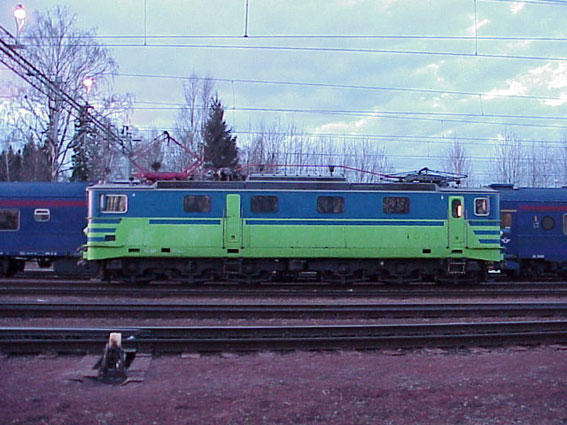
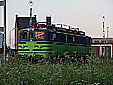
In may 2003 Ma 882 handeled the southbound container unit train. Note the different engine room windows on this ex SJ unit compared to TGOJ.s original units.
|
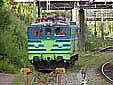
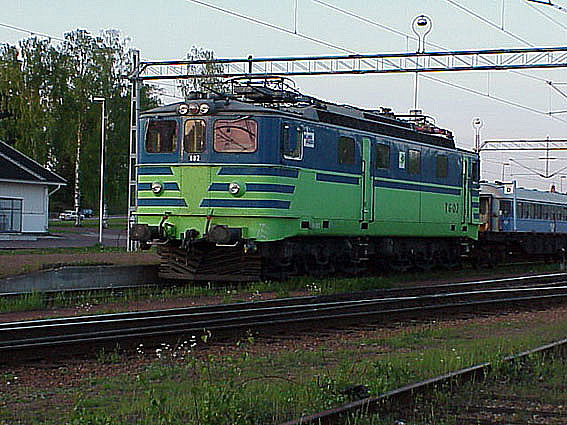
TGOJ Ma 882
|
The same engine as above in Borlänge.
Photo 6.th of August 2003.
|
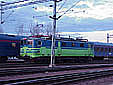
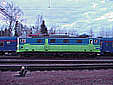
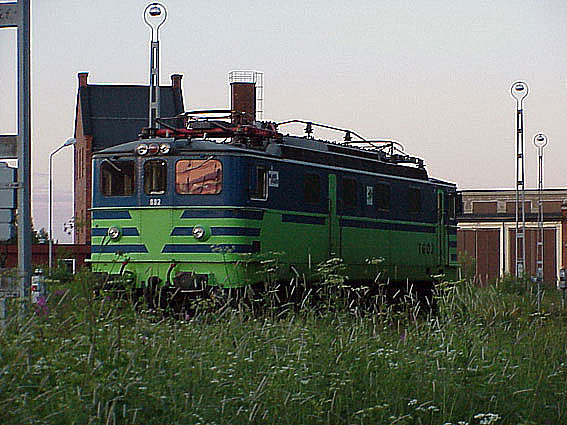
TGOJ Ma 882
|
TGOJ Ma 882, is getting ready for a light run south from Mora. 27. March 2004.
|
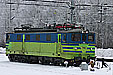
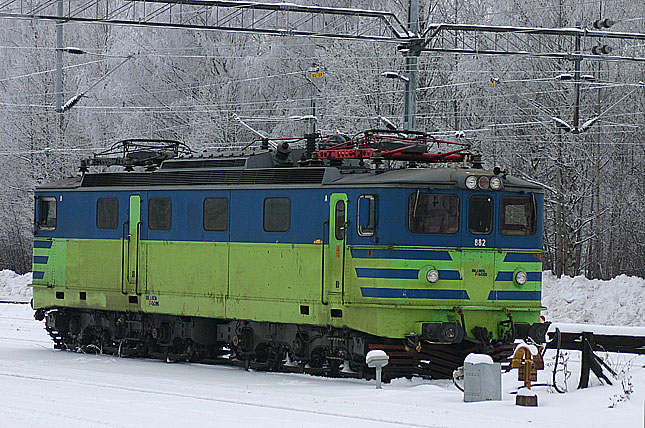
InlandGods Ma 882
|
During the winter 2005-2006 InlandGods (Inland Freight) finally decalled their MA 882. It was used on the elctric lines, but more often it sat in a rather sad faced looks in Mora and the diesels hauled the train south. Mora 13.th of February 2006.
|
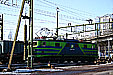
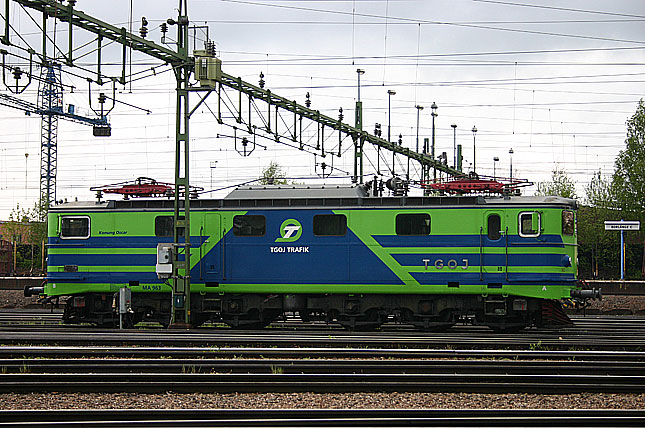
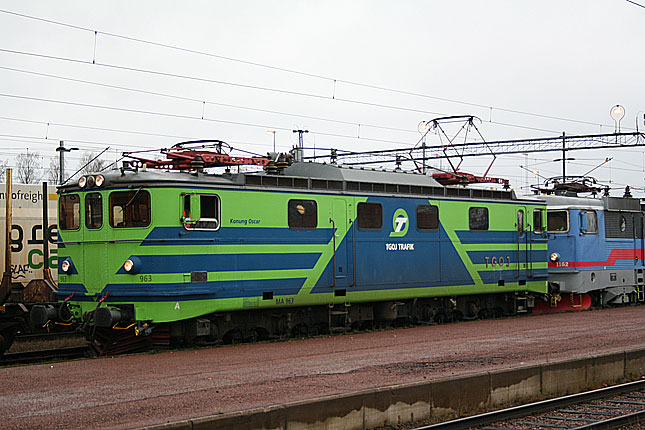
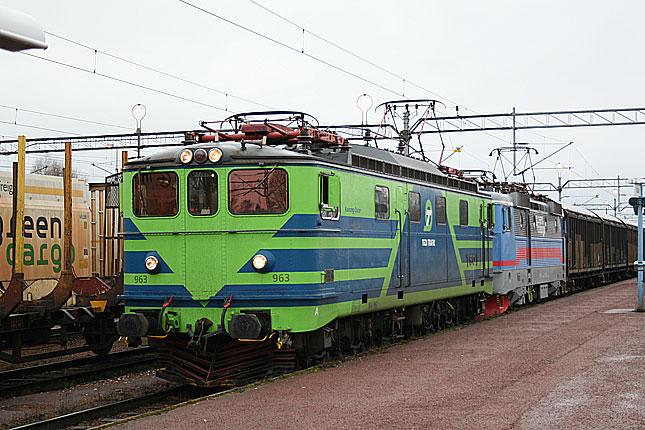
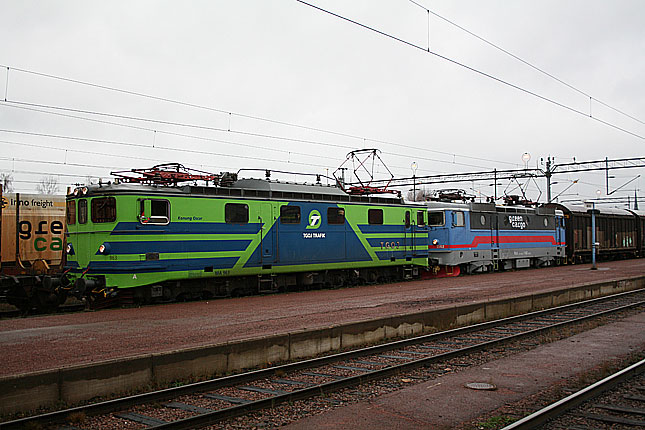
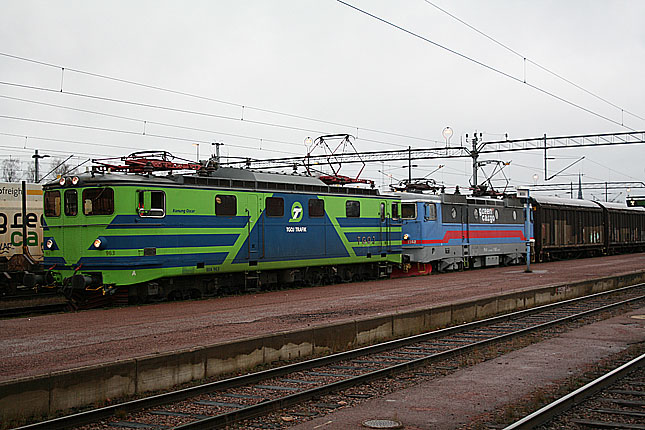
TGOJ Ma 963
|
TGOJ ex SJ 963 was caught in Borlänge in 23th of March 2006. Compared to ealier version this scheme with extra stripes does look a lot better. Note that the engine is named after King Oscar, as the both kings with that name had the privilidge to open many new railroad lines during the golden days of railroading. |
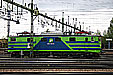
TGOJ Ma 963
|
TGOJ has repainted most of it electrics with new graphics and actually they look pretty decent. Today, the freight operations are becoming more and more a sallad of colors as there are quite a few operators hauling freight. Borlänge 2007-05-15 |
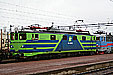
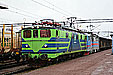
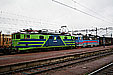
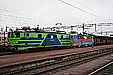
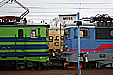
TGOJ Ma 963-GC Rc4 1192
|
You could say that it is a bit of revenge or victory for this 52 year old vetran as it is MU.ed as a lead unit for a southbound "Lunch Break Special" in the last days of November 2011. But the reason is that Green Cargo is short of units during the Rd-class conversion of their aging fleet of RC2 and Rc3 units. This has pressed any available unit found for freight duties, raging from Rc1.s to even leased units like DB Shenker Scandinavias engine of Br 185.2 class (Photos of this unit can be found else where on this site). Still this unit leased by TGOJ is not far off as this version was a SJ unit, proofed by the squere mchine room windows and higher road numbers as their original TGOJ sisters had round windows and still have road numbers starting from 400 and up. Wjat was a complete suprise to me was that the Rc unit and the Ma could be operated in a lash up. Note on the last photo the Rc4 1162 was just about loosing the rim which was holding one of the head lights, which I brought to the engineers attention.
Mora 2011-11-23 |
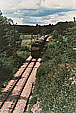
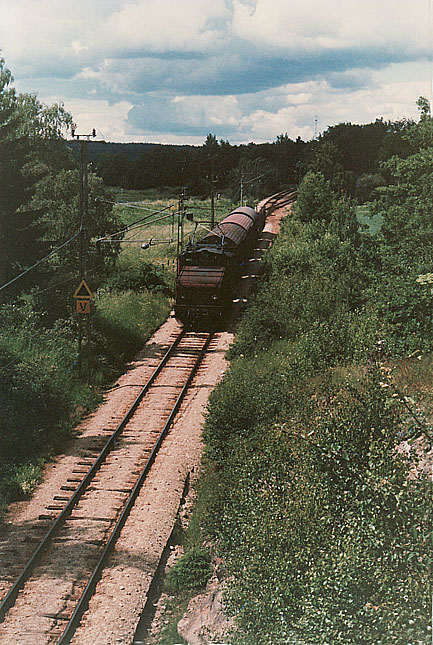
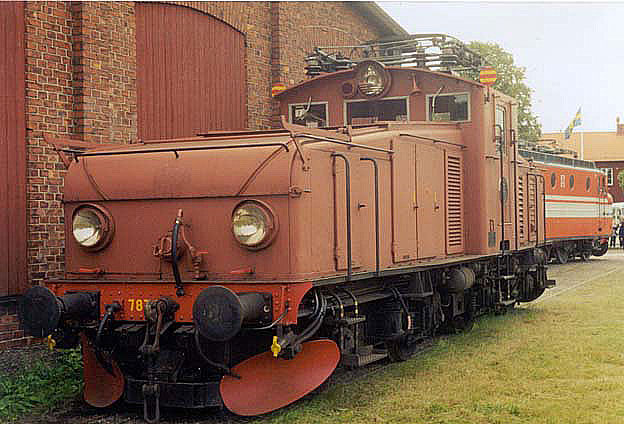
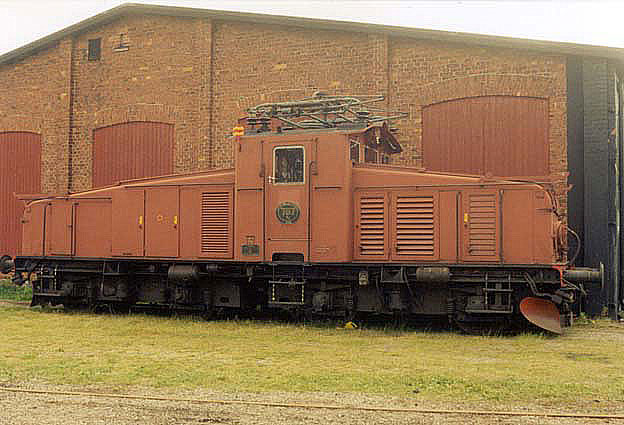
SJ Hg |
This is one of the very early shots of a train I have ever taken. I ueed my mothers old Zeiss Ikon with which focusing was a guess work.
A peddler with unknown Hg has left Läggesta and will pass under the then new line on the 600mm preserved line from Mariefred to the junction in Läggesta. Date summer july 1973.
|
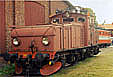
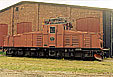
SJ Hg |
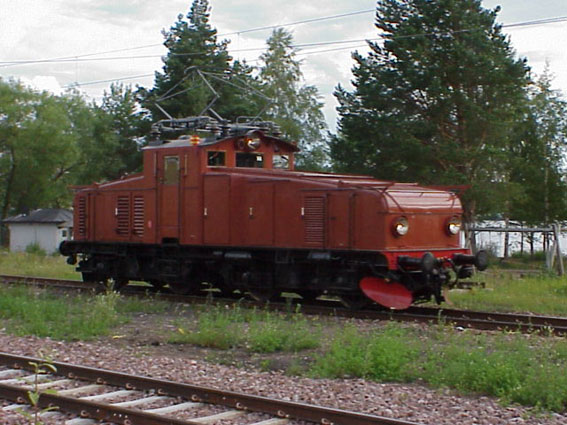
For light mainline duties and for use on electrified
branchlines a series of centercab engines equipped with trucks was constructed
The last of these classes Hg and it's multible unit equiliant Hg2 were used to the nineties.
The first of the Bo-Bo trucked engines of H-class, Ha were rated 1600 hp.
and the final developement Hg-class were rated 1760 hp.
|
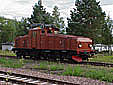
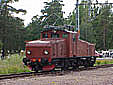
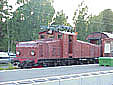
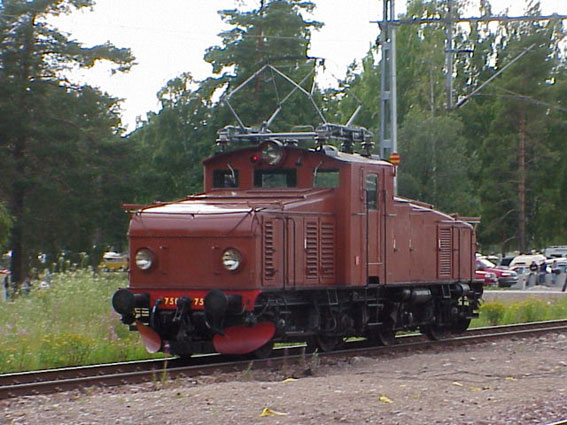
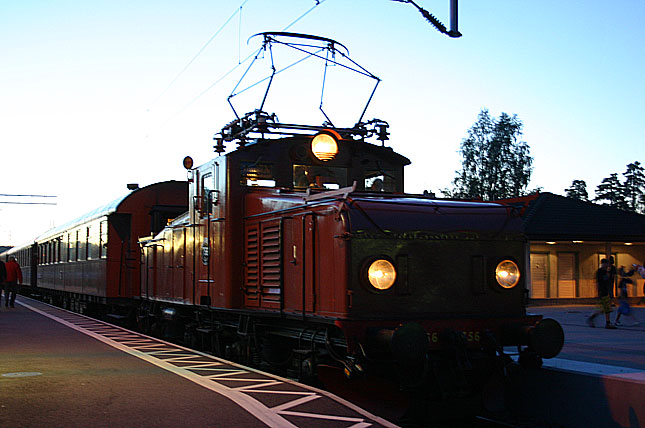
SJ Hg 756 |
One of the preserved Hg.s was in charge for a excursion train from Falun to Rättvik during the great cruising evening
which is one of the annual Classic Car Week. Here the engine is seen doing a run around
move at Rättvik station 3. August 2004.
|
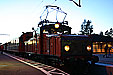
SJ Hg 756 |
Just a day one day before being exactly a year later, 2th of August 2005, the Hg 756 is back with a charterd train for the Classic Car Week cruise in Rättvik.
|
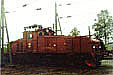
SJ Hg 787 |
The center cab Hg at RR museum in Gävle wearing unusual paint, perhaps one of the few engines weraring the old paint and the new logo, at least
considering the fact of being a Hg. The casted oval nubershied on the door has been also replaced by decals.
|
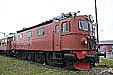
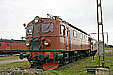
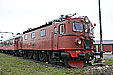
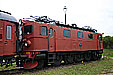
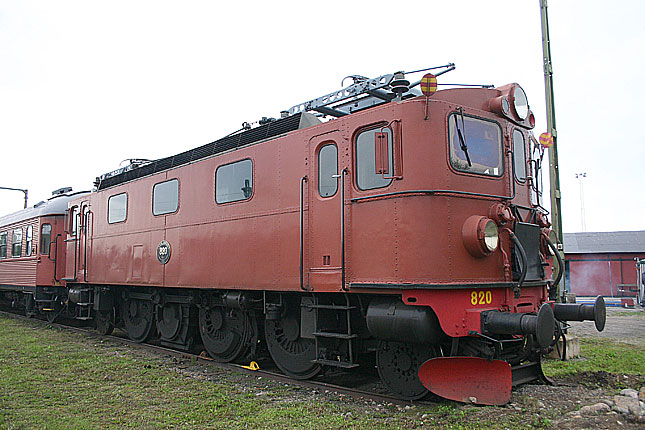
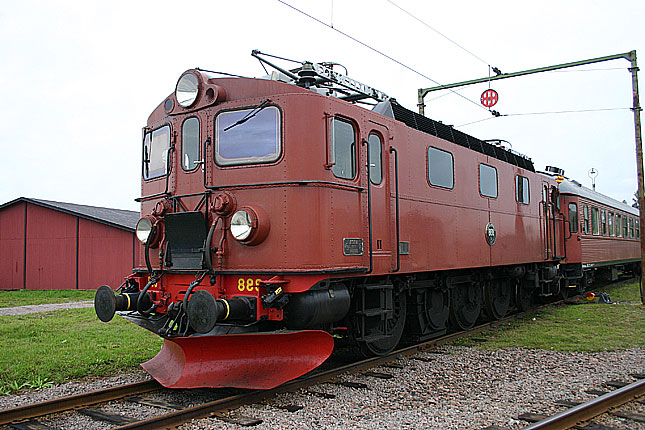
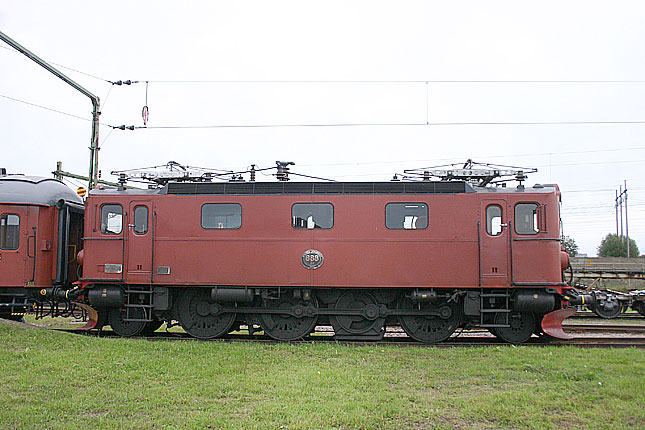
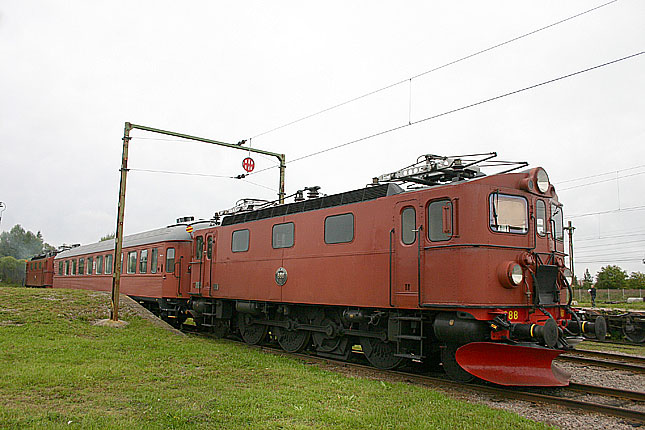
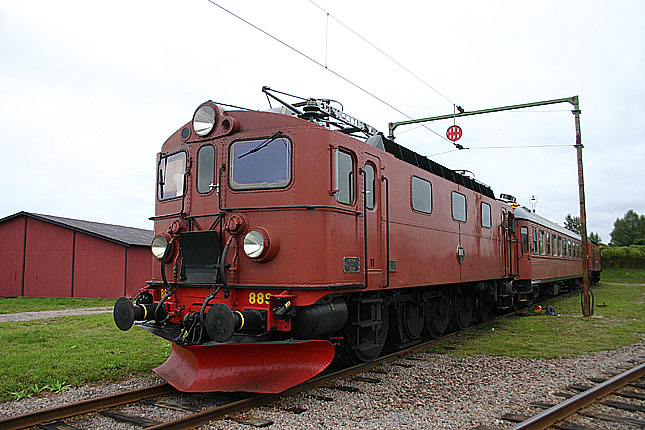
SJ Da 820 |
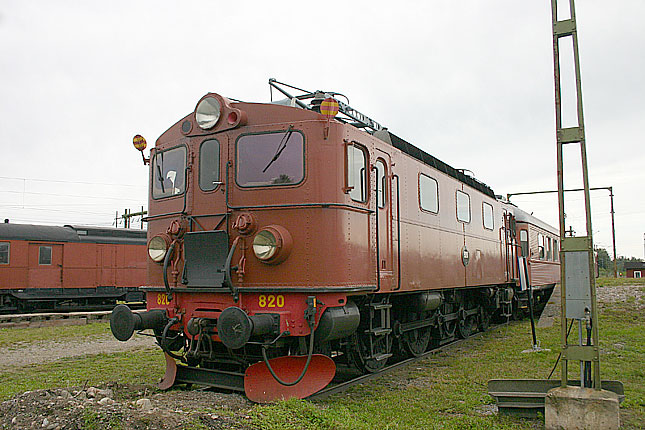
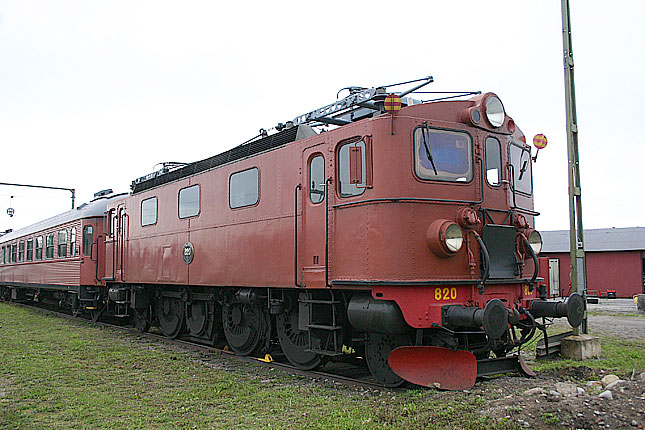
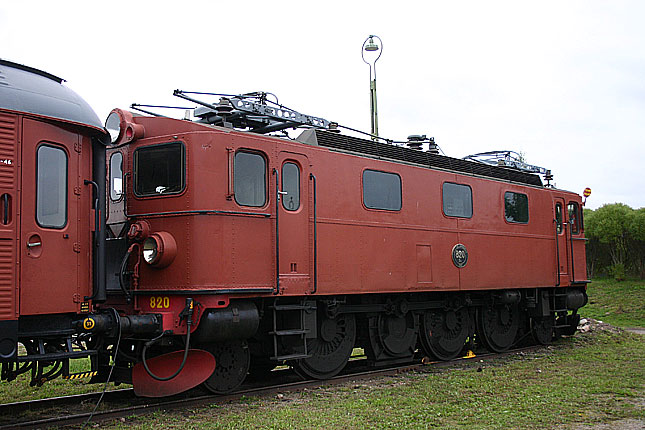
In the annual open day of Railway museum of Sweden in Gävle Da 820 was parked with a B5 passanger car and sister Da 888 on the side track. The engine is one of them who has received little modernization and new set of wheels in the 1970.s. Gävle 2008-09-06
|
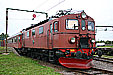
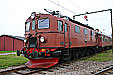
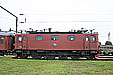
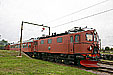
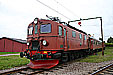
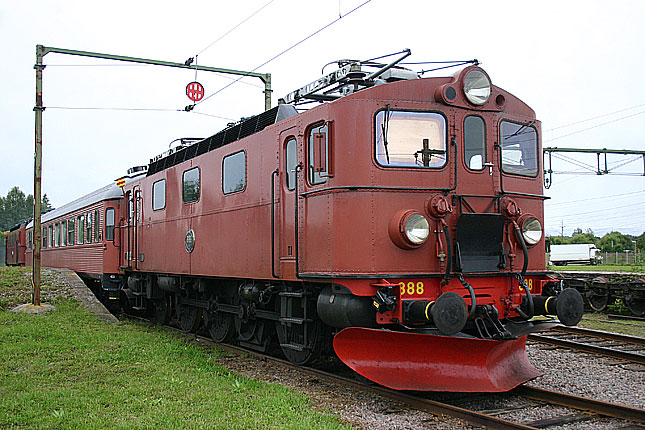
SJ Da 888 |
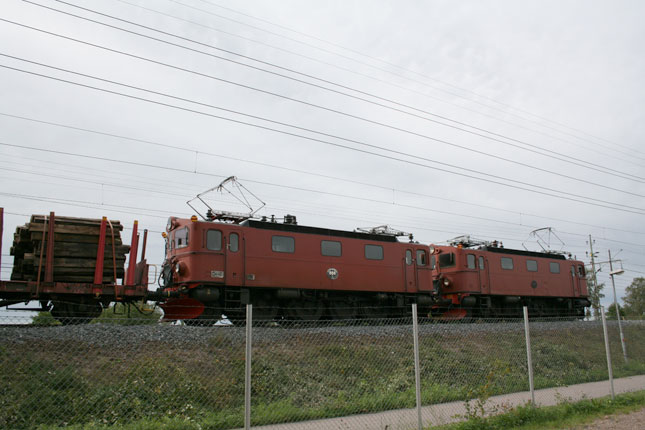
The 93 strong class of DA is amodern version of the older D-classes constructed untill 1943. But except for the wheel configuration, the size and the fact they used side rods to distribute poer to the rails, there is not much alike the two classes of engines. Da was a brain child of the 1940.s commission on SJ for nwe future power.
It was clear an allround version of an electric was needed to supplement the new engines of Ma, and express train engines of Ra class tio be built in the fifties. Da.s wehe not to be as popular among the train crews as the earlier engines of D-class and to be less rough on wheels a rubber suspended wheelsets were added in the seventies. Da 888 is now part along its sister 820 in the collections of the railway museum in Gävle. Gävle 2008-09-06
|
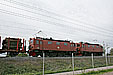
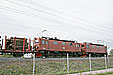
SJ Da 888 - Da936 |
The sigth of two Mu.ed Da class was common o freight trains untill the 1990.s. But today this sensation of a pair rod driven engines on a freight train is back again as a photorun for railfans on the mainline by the National Railroad Museum in Gävle. Here the engines are used as a pusher to a freight headed by a 0-10-0 Rclass steamer 976. Gävle 2009-09-12
|
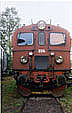
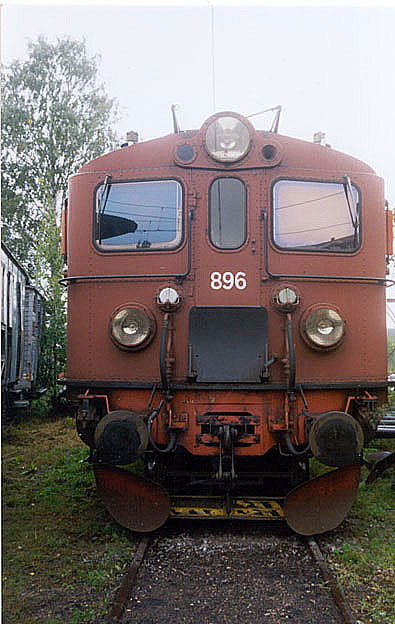
SJ Da 896
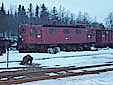
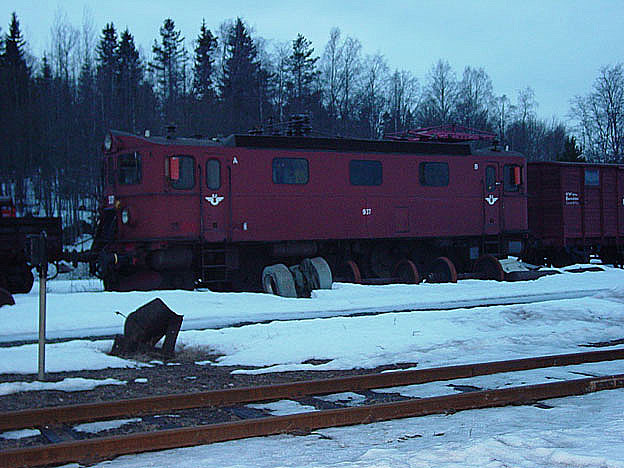
SJ Da 937 |
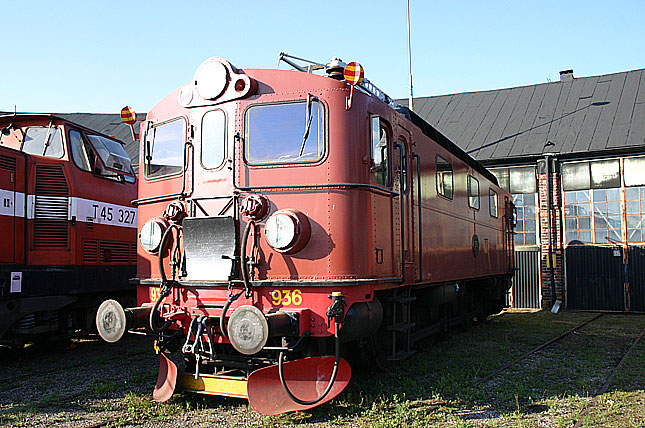
The front of a Da electric 1-C-1 siderod engine. The D-class was introduced in mid 20.s
and was built 333-units strong. The earliest of these engines where equipped with
wooden cabs, but later produced units received riverted steal cabs. The Da class
was among the last of the type produced in the 50.s and were used in freight- and
passengerservice. Only a handful of these engines remains today on SJ, none of in
regular service, kept as emergency power for trainsets for the commutertrains in
Stockholm-area. Some engines is hauling freight on regional companies. While some are
preserved, as the pictured unit by Railway museum in Gävle or by the railfan organisations
in Sweden
|
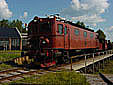
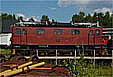
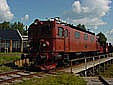
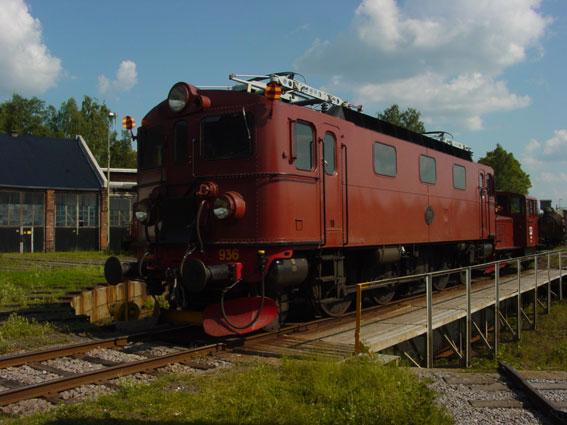
SJ Da 936 |
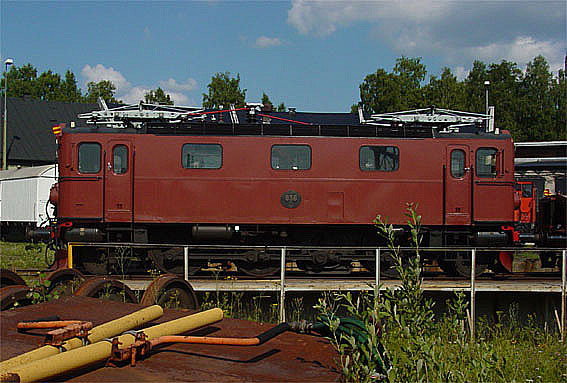
Another of the lucky ones is the Da 936. Which has found a home in Falun. Here in much restored in appearence in earlier years it enjoys the sun
on the turntable in 16.th July in 2003.
|
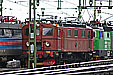
SJ Da 936 |
As a bit of timemachine view is to see this preserved Da at the shop track at Borlänge. The unit is housed in Falun but as the rail fan open day of the national rairoad museum is getting closer the early fifties 1'C 1` side rod veteran is getting some last minute attention. Borlänge 22th of August 2005.
|
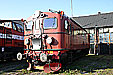
SJ Da 936 |
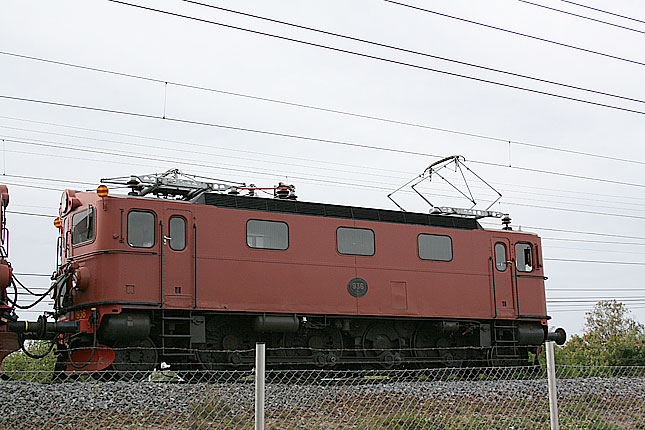
It is hard to inmagine for guys of my age that these engines, once made even more popular by a 1/87 version made by Märklin is no longer active and a majority of them not transformed to refrigerators or anything new made of steel are now preserved engines. Falun 27/8 2006.
|
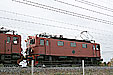
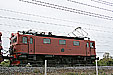
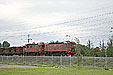
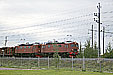
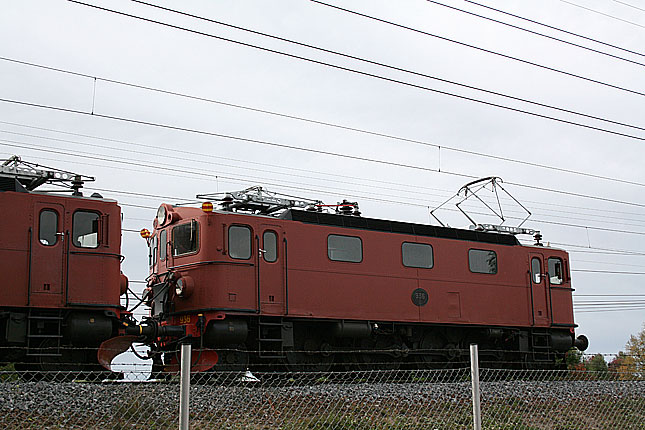
SJ Da 936 & Da 888 |
A sight of two Da units Mu.ed with a freight was pretty common only 20 years ago. But in this modern world this can be arranged by effort from rail preserving groups and the open house of the national railroad museum in Gävle. At the rear the heavy 0-10-0 R-class 976 was pushing the consist. A model of the leading unit, Da 936 was produced my Roco. Gävle 2009-09-12.
|
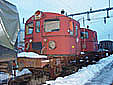
SJ Da 937 |
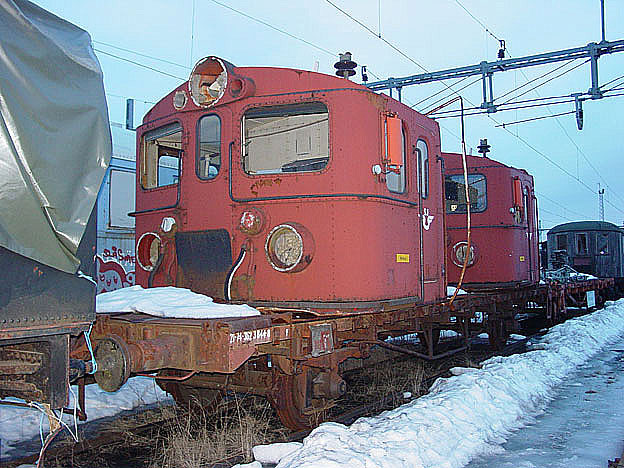
Here is an idea what to do when you get bored with the problems of expensive limited run models. Bash them and make the cabs to a load on a flatcar....
|
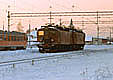
SJ Da.s in Mora. |
The winters can be bitter cold in Dalecarlia, here a pair of Da.s sitting next to a YF1 DMU,
in a very cold day in 1989. The Da.s will haul the peat briquettes train southbound next morning.
|
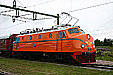
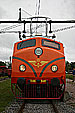
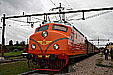
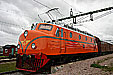
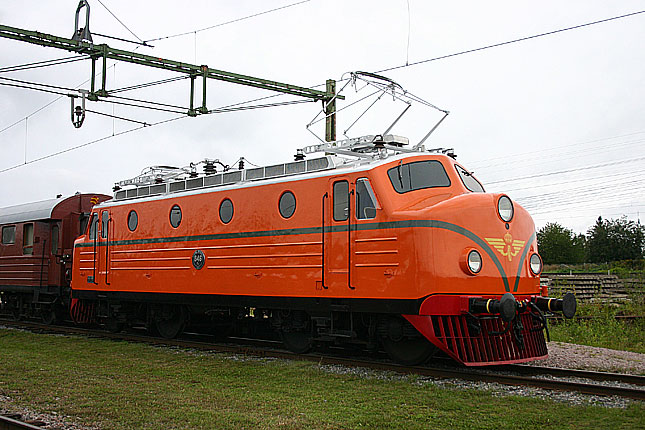
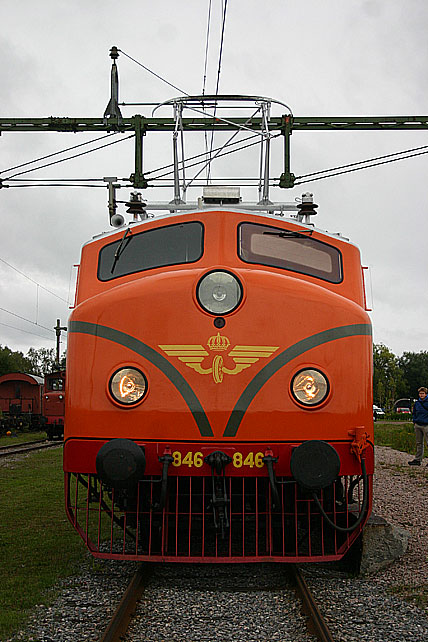
SJ Ra 846 |
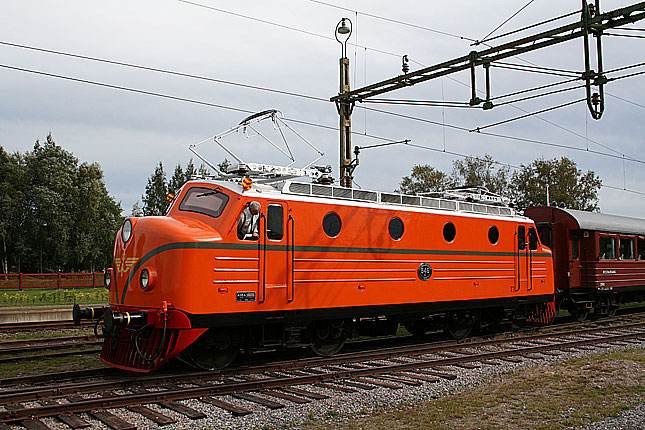
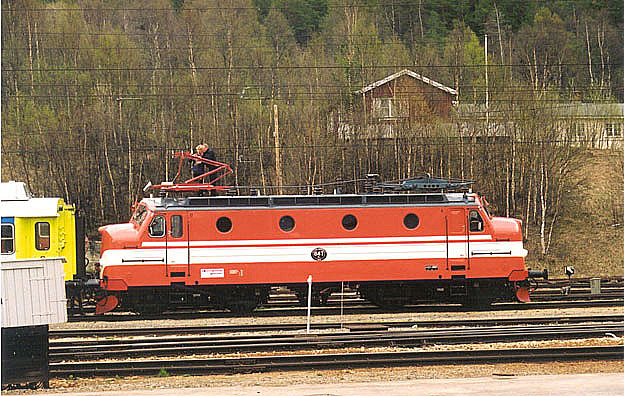
SJ was needing a modernation of its fleet of Electrics in the post WWii. Still large relying on the D-class side rods of D-class and even ordering more modern versions of Da-class. But there was a need of more faster express trains, faster that the side rods could ever deliver. In th fourites the F-class did delver much faster speeds but they proved too heavy for even to the mainlines. A mucj lighter engines were needed and in 1955 ASEA delivered the two first engines of Ra-class.These turned to be firsts in many respects, not forgrtting the 1950.s style of stram line styling to protect the engineers in high speed. To make most of these new engines the first four wer painted in this high visible orange paint... Later engines were delivered with broader white graphics and the first four of the class of ten were repainted this way too. In 2007 as SJ celebrated 150 years, the Ra 646 was rebuilt as close as it looked right after its delivery. A year later the big star was found with an express consist typical in the units early days in 1950.s.
Gävle 2008-09-06 |
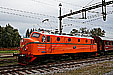
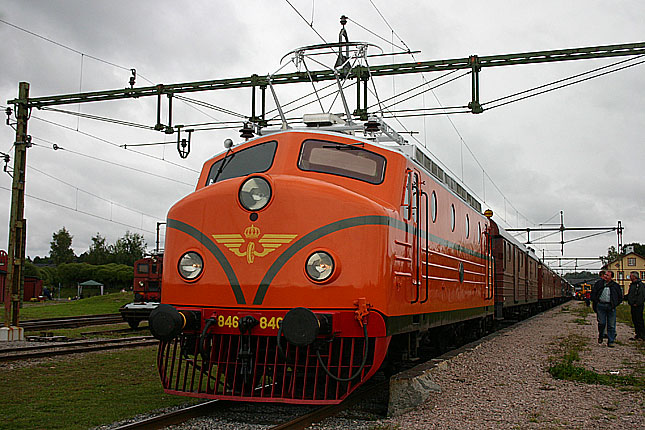
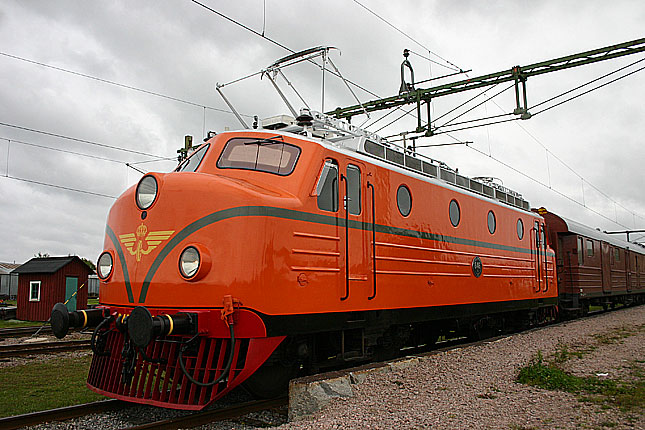
SJ Ra 846 |
One of th stars of the show of the open house at the National Railroad Museum was again the handsome Ra 846 in itis original colors.
Gävle 2009-09-12 |
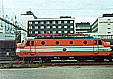
SJ Ra in Sundbyberg
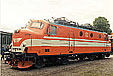
SJ Rapid 4
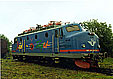
SJ Rapid 9
|
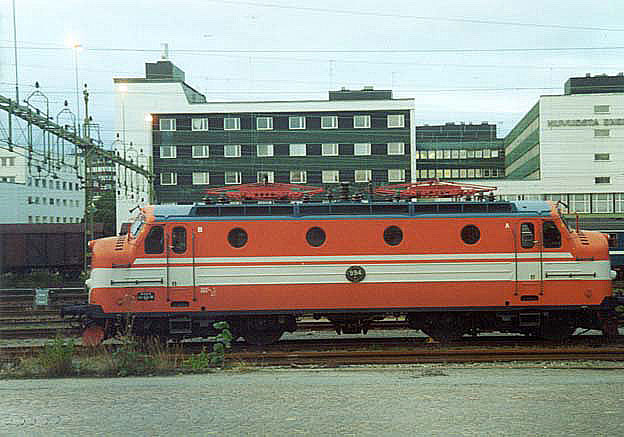
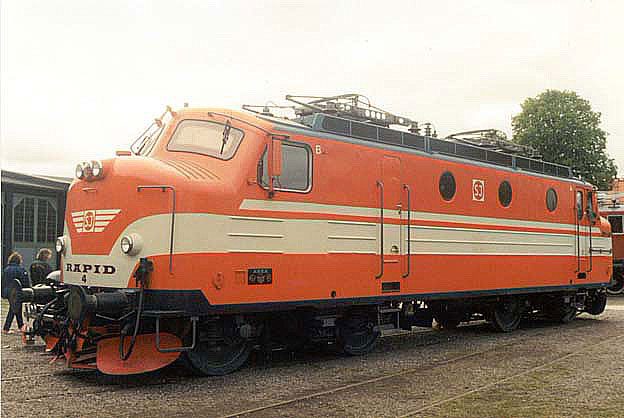
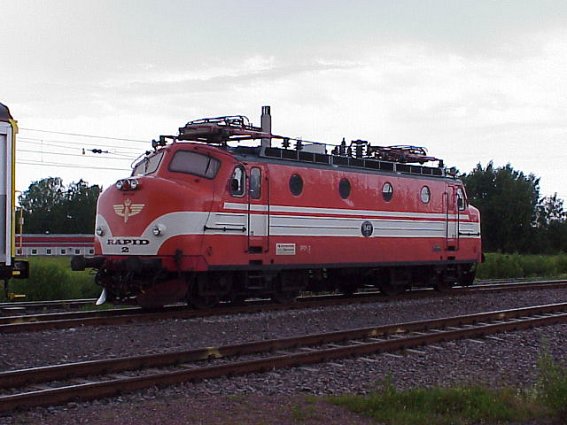
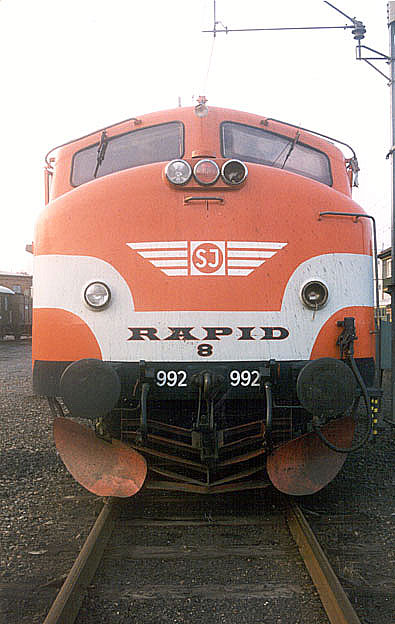
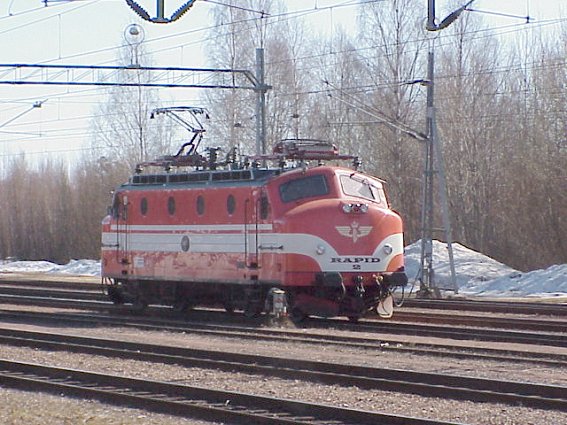
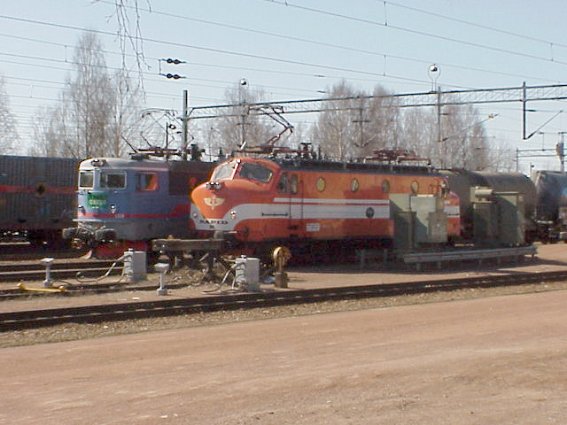
In the fifties SJ started to face fierce competion from public roads. One way was to compete was
speed. To billboard the fast service SJ ordered two streamlined engines which were nicknamed as Rapids.
These engine also received a striking orange paint with a blue stripe ehich gave attention compared to
the more conservative redbrown used by SJ. The class wass added on with additional eight engines
which were delivered in orange and white scheme, and the earlier two were repainted to version too.
The Ra class were the only streamline engines on SJ.
In latter days of service, some of the engines were rebuilt with new cabdoors and windows, in design as on Rc-class units.
These engined lost one of the machine room windows in favor for the new side enterence and sported only three round windows.
But as they were considered to be expected to being withdrawn so the program was cancelled. When the new scheme was introduced, the Ra.s were on their last legs, and at least four were preserved by different organisations and one by the National railroad Museum in Gävle. At least one of the units however received a modified blue scheme as it was signed to haul different exebition trains during the 1990.s
|
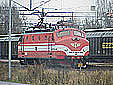
ex. SJ Ra 847 |
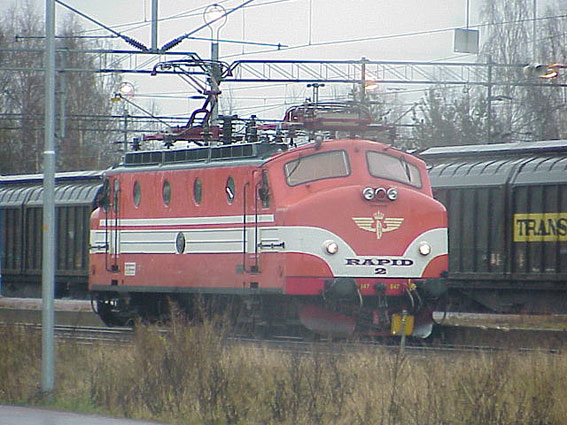
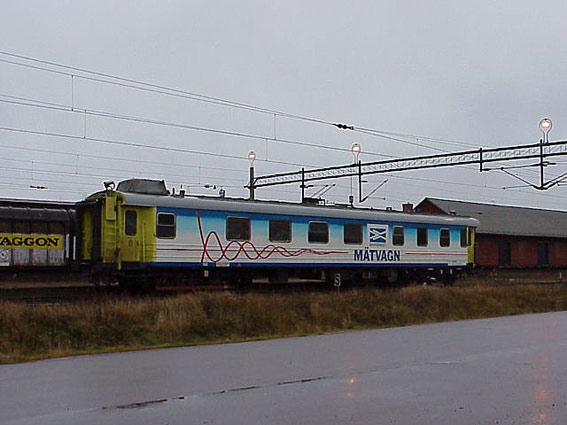
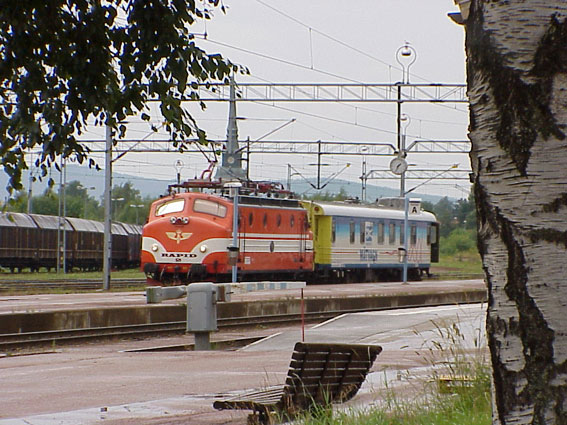
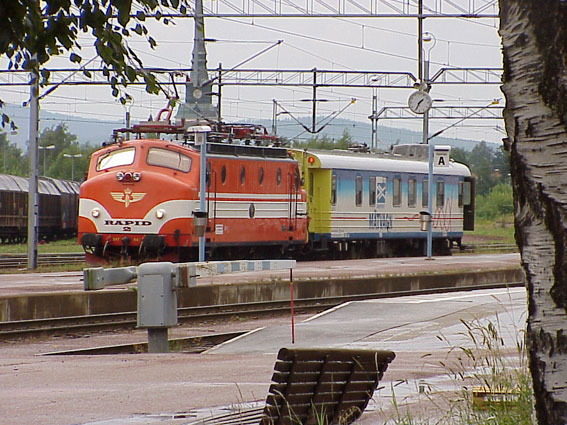
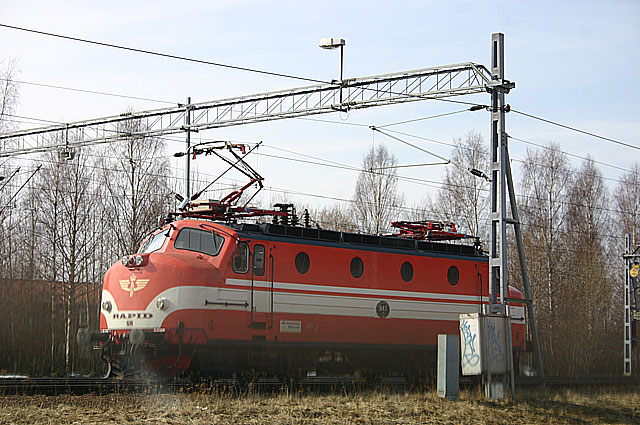
The only active of streamline bodied RA class is the RA 847. Used as a power for BV test trains of catenary and right of way hauling a single car through out the electrified lines in Sweden and Norway. The unit is actually a property of a preseving group and leased to BV. Unlike its active days as power for the most important express trains the engine has received single strut pantographs for its new duty.
Here the engine is cught in a runaround move in Mora 13.th November 2004.
A look at the Test car which is the entire consist for the Ra |
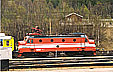
SJ Ra in Dombås. |
Another oddity, a Ra class with singel armed pantograph. Appearently the
orginal pantograph was not working as it should and a new pantograph used temporarily.
|
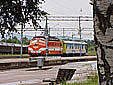
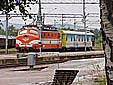
SJ Ra 2 with track geometry car. |
As seen above, the Rapid 9, is leased to BV to haul a track geometri car during the summer months over the Swedish and Norwegian tracks. Here the two some have reach Mora, where a short run around of the engine is completed and the consist will head to its homebase in Borlänge. Photo in July 2003.
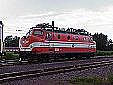
The unit in 2.nd of July 2004 in Borlänge.
|
SJ Ra 896 |
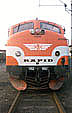
The front of the streamlined Ra engine, waiting a uncertain future in Grängesberg 1996.
Built in 50.s and early 60.s in all just 10 units. These lightweight engines were used
to haul expresstrains on the mainlines. They were considered fast with maximum speed of
150 km/h. Several of the engines have been preserved.
|
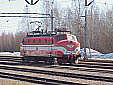
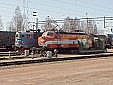
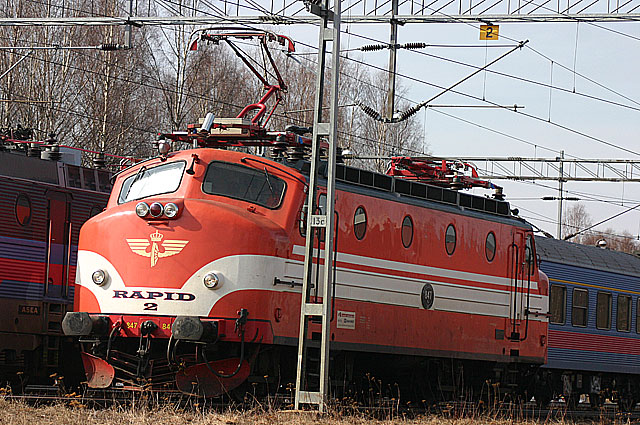
SJ Ra 847, (Rapid 2) in 2004. |
The streamline bodied Ra seen above is still used to haul a track geometry car. In early April 2004
I was lucky to catch this unit with its later day single strut pantograph up during a run around move in Mora.
|
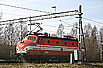
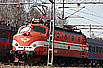
SJ Ra 847, (Rapid 2) in 2004. |
The Rapid 2, alias Ra 847 is still having a classic and elegant duty after its active days as experss train hauler days are over. Here in 2. of April 2005 it is caught in a runaround duty of its train a sole geometry car while heading back home at Borlänge. The engines is actually a pereserved unit which is leased and maintained by BV for this duty. It and its cars messuare the whole net works of Sweden and Norway every year.
|
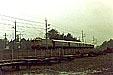
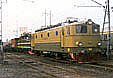
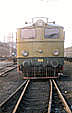
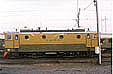
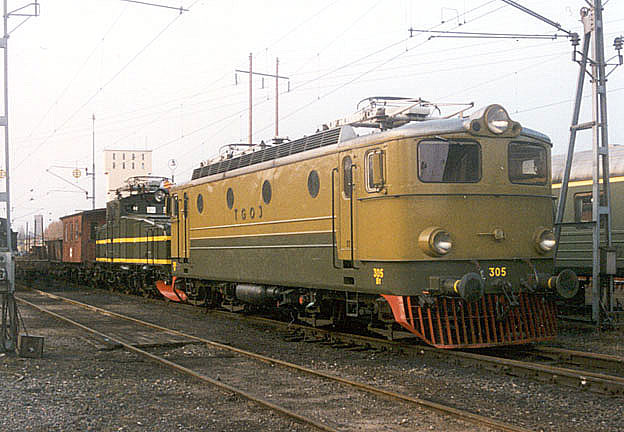
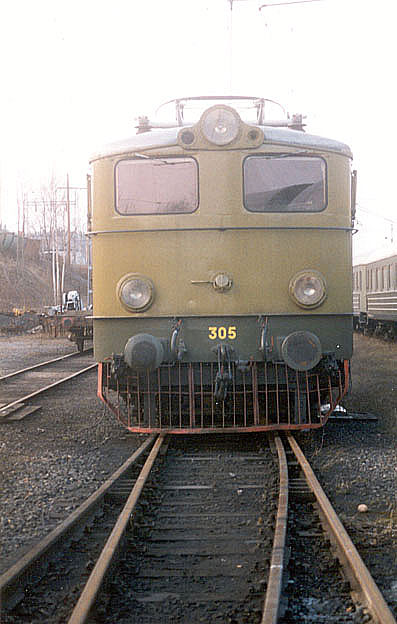
TGOJ Bt 305.
|
TGOJ was the among the last private owned lines in Sweden. And the companyname survives a pool of surplus
power for the SJ and the local companies. The Bt-class BoBo electric shares many
components with SJ Ra-class engines but differs by boxier superstructure, paint schemes
and by their slower gearing. The only surviving engine has been restored to its delivery
schemes and is used in excursion trains by TGOJ-museum i Grängesberg.
While SJ went for high speed streamlining the private TGOJ, stayed more conservative with the BT class near sisters.
During the fifties TGOJ replaced their steamers with Bt.s on dual services and Ma.s on iron ore and heavy freight services.
Most of the passenger runs were using the lightweight EMUS of X21 and X22 classes. These classes were suplemented with SJ
designed Hg.s and various diesel switchers.
But TGOJ invested modestly on new steelbodied passengercars. Actually, on this photo you can see half of the fleet, behind the
sole surviver of the Bt.s all repainted in the orginal scheme. In later period, the Bt.s alon all the electrics we repainted in orange and white, while
the passengercars were repainted in SJ scheme standards.
|
TGOJ Hg. |
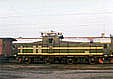
TGOJ added some engines of standard SJ designs to its roster, just like this preserved Hg.
The engine seen here is repainted to its orginal green color, during the sixities TGOJ went to orange and white,
and the scheme on Hg.s made them busy looking units.
|
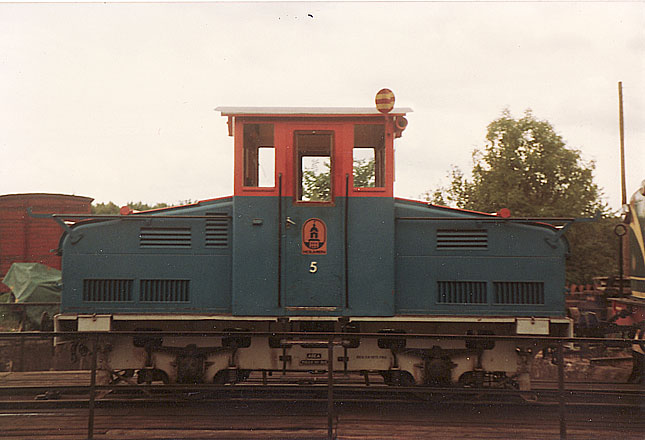
HB 5. |
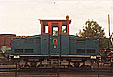
Sweden was rich on all types of narow gauge during the gplden years of railroading. Plants also used a net work of rails to move products from one part of the plant to another. Here a 3 foot (891 mm) gauge battery locomotive that has been preserved on ULJ line near Uppsala. Faringe mid 1980.s
|